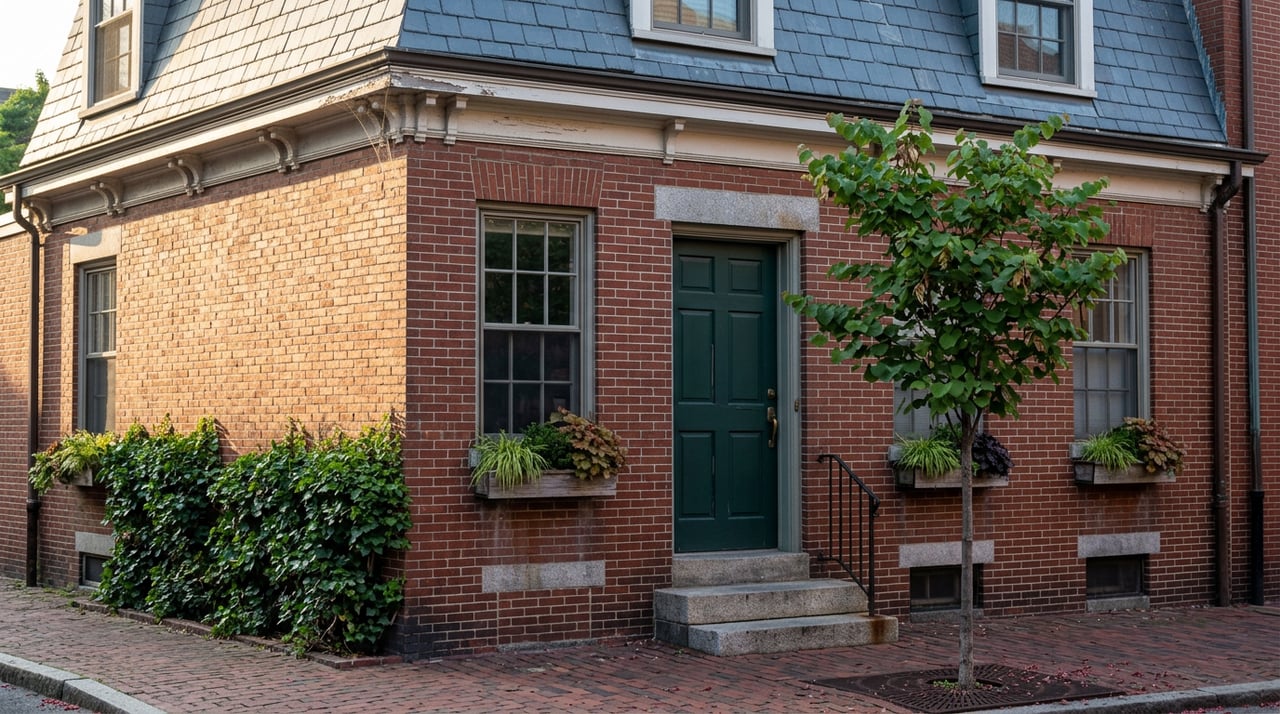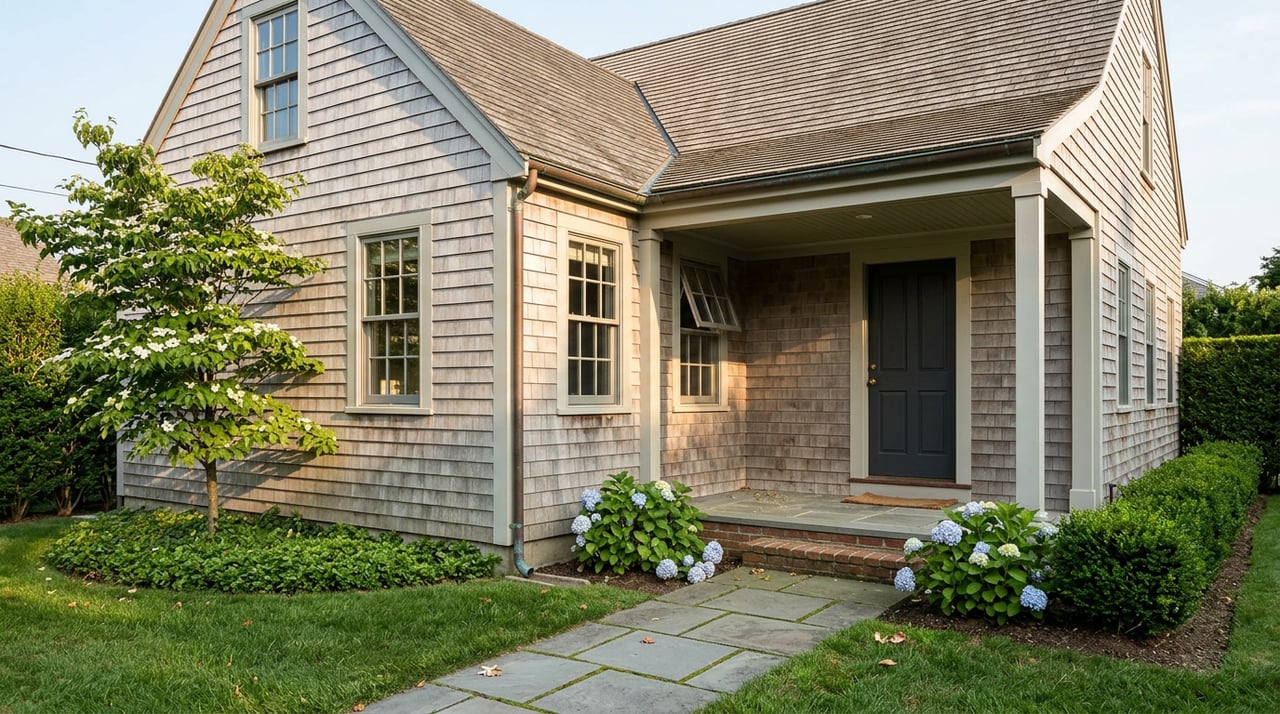
Portsmouth, New Hampshire has roughly seventeen single-family homes for sale at any given moment this year. That is not a seasonal dip and it is not a typo. It is what a decade of tightening inventory does to a small coastal city with almost no undeveloped land left to build on. For as long as most buyers have been watching this market, the assumption has been simple: Portsmouth is full, so prices only go one direction.
That assumption just got more complicated. On July 1, 2026, a new state law took effect, as reported by BillTrack50. Devine Millimet explains that it requires New Hampshire cities to allow multifamily and mixed-use housing on commercially zoned land as a matter of right, without a variance or special exception. The more immediate constraint on Portsmouth's housing supply has been which parcels were legally allowed to hold housing, rather than the amount of available land. That legal map just got bigger, and buyers comparing Portsmouth to Kittery, Dover, or anywhere else on the Seacoast need to understand what changed before they read the next market report as gospel.
The Number That Doesn't Move, and the Two That Do
Start with what the scarcity actually looks like on the ground. Portsmouth's active single-family inventory has collapsed from around 119 average monthly listings in 2016 to roughly 17 today. Over the past decade, single-family prices in the city have doubled, moving from a $500,000 range to well over $1 million. Condos have climbed from the $460,000s to the $1 million mark. In 2022, the average Portsmouth home sold for slightly above its asking price.
But averages hide the range, and the range tells the more useful story. In January 2026 alone, a condo at 5 Spinnaker Way sold for $530,000 after just 28 days on the market. In the same month, a unit at 70 Maplewood Ave closed at $2.6 million after sitting for 485 days, and a unit at 15 Shearwater Dr sold for $1,435,000 after 381 days. Two properties can carry wildly different timelines depending on price point, condition, and whether they're competing against a genuinely thin pool of comparable listings or a crowded one.
That spread matters because it's exactly the kind of friction that new supply is supposed to smooth out. When there are only seventeen single-family homes on the market, a handful of overpriced or oddly configured listings can sit for over a year while anything realistically priced under $600,000 disappears in under a month. More product, especially product that isn't competing directly with historic single-family stock, changes that math.
How Zoning Rules Shaped Portsmouth's Housing Options
For years, converting an underused Portsmouth commercial property into housing meant navigating zoning requirements. Portsmouth had a lot of commercially zoned land, including retail space with poor visibility, aging office buildings, and underused parcels along commercial corridors where the location made sense for housing.
That is the part of the story that doesn't show up in a listing count. The city's physical footprint didn't shrink. The rules around what could legally sit on that footprint just narrowed over time, until seventeen active single-family listings became the norm rather than the exception.
What Changed on July 1
House Bill 631, signed by Governor Ayotte in mid-2025 and effective July 1, 2026, requires municipalities to permit multifamily and mixed-use development as a permitted use, not a request, on parcels zoned for commercial, office, retail, or parking use, provided the parcel already has municipal water and municipal sewer service. Portsmouth's compact downtown and commercial corridors run largely on city water and sewer lines already, which is precisely the infrastructure test the law requires. Towns without municipal sewer service barely feel this law. Portsmouth is exactly the kind of dense, already-sewered small city where it has real teeth.
The law also addresses adaptive reuse directly. When an existing building is converted to multifamily or mixed-use housing, municipalities have to grant exemptions from local setback, height, and frontage rules, as long as the building's existing footprint, height, and setbacks don't grow. That single provision matters more than it sounds. It means a nonconforming old commercial building doesn't need to be torn down and rebuilt to code to become housing. It can convert as-is.
The Follow-Up Laws on Local Implementation
Some municipalities adopted requirements that limited HB 631's effect. According to Governing, Kingston's town meeting passed a zoning update in March 2026 that technically allowed multifamily housing in commercial zones, but only through a conditional use permit, capped at 24 units per structure and 8 units per acre, with a 50-foot landscaped buffer requiring at least half evergreen trees. Two more laws, House Bill 1010 and House Bill 1588, addressed those types of local restrictions. Municipalities can no longer impose density caps, and any height, setback, or frontage rule on the new housing can be no stricter than what already applies to commercial buildings in that same zone. If a zone allows a two-story store, it allows a two-story apartment building.
The law also gives developers a real incentive to challenge municipal requirements.
"The developers win because it's easier for them to know what's allowed, what's not allowed."
The Concord Monitor quoted Nick Taylor, director of Housing Action New Hampshire, describing why the follow-up legislation matters. According to Hinckley Allen, developers wrongly blocked from building housing in a commercial zone can now recover attorney's fees if they win at the state Housing Appeals Board or in court, which raises the potential cost of municipal noncompliance.
What's Already Moving in Portsmouth
Several projects are already in the pipeline in Portsmouth.
| Project | What It Is | Where It Stands |
|---|---|---|
| Lafayette Square Lofts | Adaptive reuse of a former industrial building on Lafayette Road into 25 loft-style condominiums with ground-floor restaurant space | Proposed conversion of an existing structure |
| South Mill Pocket Neighborhood | 12 single-family cottages built around shared green space and a community pavilion, priced from roughly $550,000 to $750,000 | In the approval process, with cottages as an alternative to larger single-family homes |
| Crawford Bay | A 6-acre waterfront site, the former Holiday Inn, targeted for a mixed-use master plan | City is selecting a master developer by November 2026, with a second phase involving relocating City Hall by 2028 |
The city is also investing in the pedestrian experience around this growth. Portsmouth's Department of Public Works is moving forward with a restoration of the Vaughan Mall, the walkway connecting Congress and Hanover streets downtown, adding public art space, new lighting, and shade structures.
What This Means If You're Comparing Portsmouth to Its Neighbors
None of this makes Portsmouth cheap overnight. The projects above still need to clear planning board review and get through construction, which realistically puts new units 18 to 36 months out even for the ones already in motion. If you're comparing Portsmouth's median home price to Rockingham County's broader $660,000 median in the first quarter of 2026, or to New Hampshire's statewide $530,000 median over that same period, Portsmouth is still going to look expensive relative to its neighbors for a while yet.
What's changed is the ceiling on what gets built and where. A commercial parcel on a corridor like Lafayette Road that had limited redevelopment potential a year ago now has a legal path to become housing without a variance fight. For a buyer trying to decide between a condo in Portsmouth and a single-family home twenty minutes away in Kittery or Dover, that's worth factoring in less as a reason to wait and more as a reason to widen the search to include commercial-adjacent neighborhoods that weren't part of the conversation before. For an investor or small developer looking at an underused retail building or office parcel inside city limits, the question worth asking now is whether that parcel sits on municipal water and sewer, because that single infrastructure fact determines whether HB 631 applies at all.
A Few Questions Worth Asking
Does this mean Portsmouth home prices will drop soon? Not on any short timeline. The active pipeline adds meaningful new units, but planning board review and construction take time, and existing single-family scarcity won't resolve in a single building cycle.
Which parts of Portsmouth are most likely to see new multifamily buildings? Commercial corridors already served by city water and sewer, which describes most of downtown and the primary commercial streets, are the areas where HB 631 has the most immediate reach.
Do I need to think about this if I only want a single-family home? Indirectly. More multifamily and condo supply on commercial land can ease some of the competition currently spilling over into single-family listings from buyers who'd otherwise take whatever they could find.
Portsmouth's housing math has run on the same scarcity story for a decade. That story just picked up a genuine plot twist, and it's worth understanding before you make a decision based on last year's version of the market. If you're weighing Portsmouth against the towns around it, or trying to figure out what a commercial parcel might actually be worth under the new rules, the team at Williams & Co. knows this stretch of the Seacoast closely. Let's Connect.
This article is general information, not legal, tax or financial advice. Consult a qualified professional about your situation.